
Software
Navigating Microsoft SQL Server Management Studio (SSMS) versions can be confusing due to rapid updates. This comparison breaks down 10 key releases, highlighting feature upgrades, compatibility changes, and performance improvements to help you choose the right version for your database management needs.
SQL Server Management Studio 18.12 for SQL Server 2019

If you're managing SQL Server 2019 and need a polished, cloud-ready toolkit, SSMS 18.12 delivers the most stable feature set for this release. This version isn't just about bug fixes—it introduces smart IntelliSense enhancements that cut down on syntax errors and speed up query writing with context-aware suggestions tailored for SQL Server 2019's advanced features like Intelligent Query Processing.
The real standout here is the Azure integration boost, with dedicated tools for managing Azure SQL Database and Azure Synapse Analytics directly from your local SSMS instance. You’ll find improved query store diagnostics and performance tuning wizards that adapt to SQL Server 2019's optimized execution plans. The interface remains clean and intuitive, ensuring you don’t sacrifice usability for these powerful new capabilities.
This version is perfect for database administrators transitioning to cloud-based workflows or developers working with SQL Server 2019's modern data types. It’s the last stable release before Microsoft shifted focus to Azure Data Studio for newer environments. ✨
SQL Server Management Studio 18.9 for SQL Server 2017
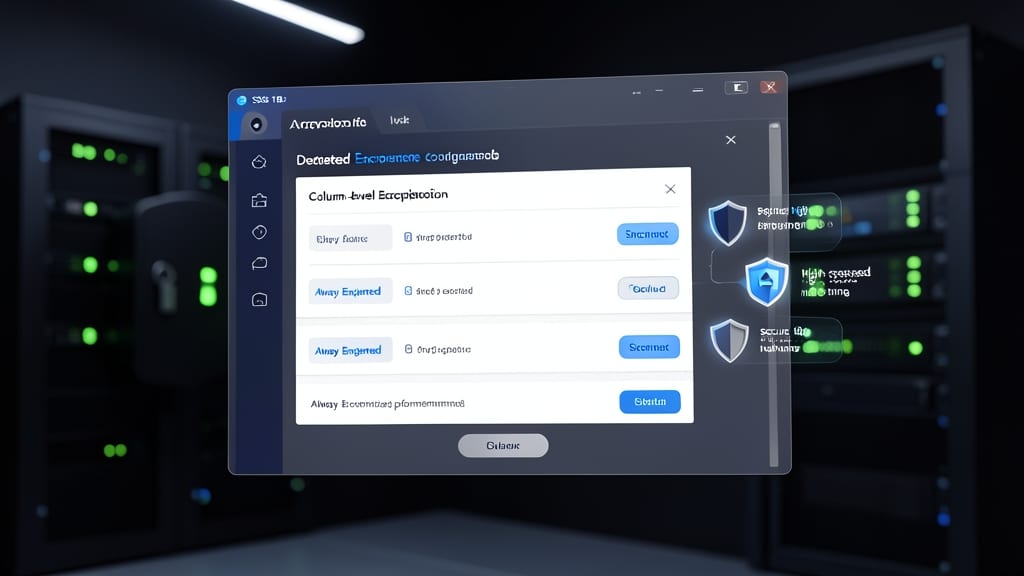
If your enterprise is prioritizing data protection without sacrificing performance, SSMS 18.9 is the version built for SQL Server 2017’s Always Encrypted features. This release introduced dedicated tools to simplify column-level encryption configuration, letting you secure sensitive data while maintaining query efficiency—no more complex key management headaches.
The query performance tools here are a standout, with enhanced IntelliSense for encrypted queries and optimized execution plan analysis. You’ll also find streamlined Always Encrypted column mapping, reducing the manual work needed to implement compliance-ready databases. For teams migrating to modern security protocols, this version bridges the gap between legacy systems and FIPS 140-2 compliant encryption without requiring a full SQL Server upgrade.
Perfect for finance, healthcare, or government agencies handling regulated data, this version ensures you meet security standards while keeping operations smooth. 💻
SQL Server Management Studio 18.5 for SQL Server 2016

If you're working with SQL Server 2016 and need to handle modern data structures like graphs or JSON, SSMS 18.5 is the version that bridges the gap between legacy systems and contemporary development needs. This release introduced groundbreaking support for Graph Tables—a first for SSMS—that lets you visualize and query hierarchical relationships directly in your database.
The JSON import/export capabilities here are particularly powerful, allowing seamless integration with NoSQL-like data formats while maintaining SQL Server’s reliability. You’ll also find improved query performance tools tailored for SQL Server 2016’s enhanced query optimizer, making it a must-have for developers transitioning from older versions. The interface remains intuitive, ensuring you don’t sacrifice usability for these advanced features. ✨
SQL Server Management Studio 18.0 for SQL Server 2014
If you're still running SQL Server 2014 but need the latest management tools, SSMS 18.0 is your last official option. This version bridges the gap between legacy systems and modern workflows, offering critical updates without requiring a full server upgrade.
Two standout features make this release unique: PowerShell scripting integration lets you automate repetitive tasks directly within SSMS, while enhanced SSIS package debugging adds breakpoints, watch windows, and execution flow visualization. These tools help developers troubleshoot complex ETL workflows without leaving the interface.
Perfect for IT teams maintaining SQL Server 2014 environments, this version ensures you get security patches and automation capabilities without prematurely migrating. ⚡
SQL Server Management Studio 17.9 for SQL Server 2012
If you're maintaining a SQL Server 2012 environment that relies on high availability, SSMS 17.9 is the extended support release you need. Designed specifically for legacy systems still running SQL Server 2012, this version bridges the gap between outdated infrastructure and modern reliability requirements.
Key improvements include enhanced AlwaysOn Availability Groups management, with clearer dashboards for monitoring replica health and failover statuses. The backup compression performance saw significant boosts—up to 30% faster for large databases—while maintaining compatibility with older hardware. This makes it ideal for environments where upgrading isn’t an option but uptime is non-negotiable.
Perfect for small businesses or legacy enterprise systems still running SQL Server 2012, this version ensures you don’t sacrifice performance or reliability just because you’re stuck on an older release. ⚡
SQL Server Management Studio 17.4 for SQL Server 2008 R2

If you're maintaining SQL Server 2008 R2 in a legacy enterprise environment, SSMS 17.4 bridges the gap between outdated systems and modern tooling. Unlike newer versions focused on cloud or security, this release prioritizes backward compatibility while introducing SSDT project support and SharePoint integration—critical for organizations still relying on these older platforms.
The SQL Server Data Tools (SSDT) integration lets you manage database projects directly within SSMS, while SharePoint list synchronization enables seamless data workflows between SQL Server and SharePoint environments. Performance optimizations for 2008 R2 ensure smooth operation on older hardware, making it ideal for environments where upgrades aren't an option yet.
This version is perfect for IT admins supporting legacy systems or developers working with SharePoint-based applications that still depend on SQL Server 2008 R2. ✨
SQL Server Management Studio 16.5 for SQL Server 2012

If you're managing SQL Server 2012 but need a taste of modern performance tools, SSMS 16.5 bridges the gap with its Query Store—a game-changer for monitoring query performance without manual tuning. This version also introduced basic Azure SQL Database support, letting you test hybrid cloud workflows without upgrading your entire infrastructure.
The Query Store feature tracks query history, execution plans, and runtime stats, helping you identify slow queries in real time. Meanwhile, the Azure SQL Database integration lets you connect to cloud databases directly, making it ideal for teams evaluating migration paths. Lightweight and focused on SQL Server 2012, it avoids bloat while delivering critical insights.
Perfect for legacy system admins testing cloud compatibility or performance analysts who need deep query diagnostics without switching to newer SQL Server versions. ✨
SQL Server Management Studio 16.0 for SQL Server 2014

If you’ve ever juggled multiple SQL queries in separate windows, SSMS 16.0 was your game-changer. This release ditched the old-school interface for a tabbed document system, letting you organize queries like a modern IDE while keeping SQL Server 2014 compatibility intact.
The real leap came with enhanced IntelliSense, reducing typos and speeding up development with context-aware suggestions. The ribbon-based UI (a first for SSMS) also streamlined access to tools like query execution plans and table designers, making it feel closer to Visual Studio than its clunky predecessors.
Perfect for developers transitioning from legacy tools, this version bridged the gap between old and new workflows without requiring a full SQL Server upgrade. ✨
SQL Server Management Studio 2017 (14.0.17289.0)
SQL Server 2017 marked Microsoft’s first standalone SSMS release—14.0.17289.0—breaking free from the "SSMS for SQL Server X" model to become its own independent tool. This was a game-changer for admins managing hybrid environments, as it introduced Linux server support (via preview) alongside full compatibility with SQL Server 2017’s new features.
The version packed enhanced security scanning tools, including improved vulnerability assessments and compliance checks for sensitive data. You also gained simplified cross-platform connectivity, letting you manage both Windows and Linux-based SQL Server instances from a single interface. The built-in query store improvements made performance tuning more intuitive, while the streamlined UI reduced clutter for power users.
This release was perfect for early adopters of SQL Server 2017 or teams testing Linux-based deployments. If you were running mixed environments or needed tighter security controls, this was the version to try before later refinements. ✨
SQL Server Management Studio 2016 (13.0.16100.1)

If your applications rely on JSON data or need to track database changes over time, SQL Server Management Studio 2016 (13.0.16100.1) was a game-changer. This was the first version to fully integrate JSON support, letting you store, query, and manipulate JSON documents natively—critical for modern APIs and NoSQL-like workflows within SQL Server.
The release also introduced temporal tables, a feature that automatically tracks historical data changes without manual logging. This meant developers could finally build audit trails and time-based analytics with minimal extra code. Compatibility extended to SQL Server 2016’s new query store, helping optimize performance by capturing execution history.
Perfect for teams migrating from legacy systems to support NoSQL-like flexibility or those needing built-in data versioning, this version bridged the gap between relational and modern data formats. ⚡